Do Packing Cubes Actually Save Space?
Yes — compression packing cubes genuinely reduce packed volume by zipping trapped air out of soft clothing, but they reduce zero weight: a compressed jacket weighs exactly the same, so cubes help you beat an airline's size limit while making it easier to accidentally exceed its weight limit.
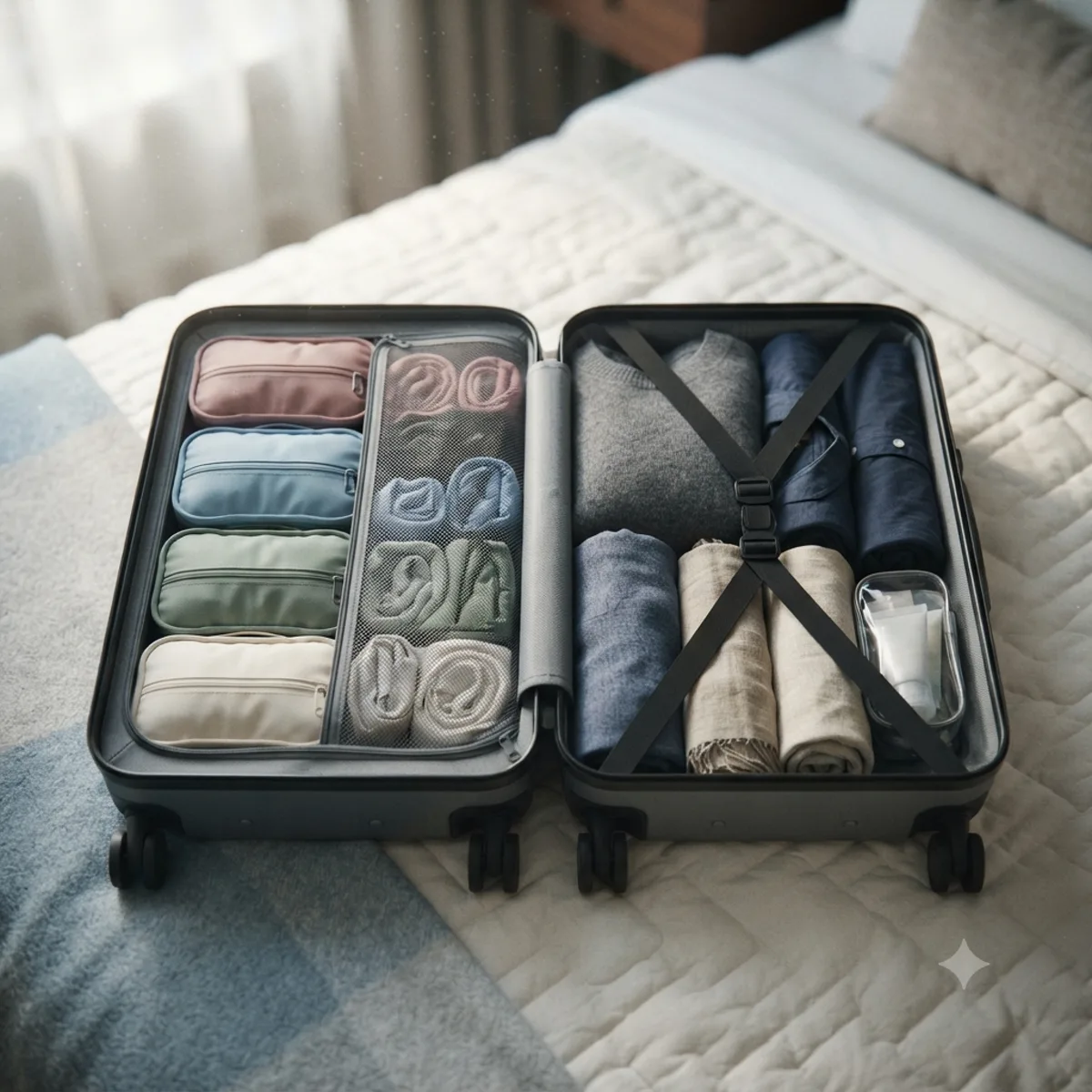
What compression actually does
Soft clothing is mostly trapped air. A dual-zip compression cube closes like a normal organizer, then a second zipper cinches the cube thinner, forcing that air out. The effect is real and testable — it's the one travel-accessory category with a genuine, physical space-saving mechanism rather than just organization. Standard cubes without a compression zipper still help, but their gain comes from disciplined folding, not compression.
The weight trap
Compression changes volume only. Most major U.S. carriers publish no carry-on weight limit, so domestically the trap rarely springs — but Frontier caps carry-ons at 35 lb, and international carriers enforce real caps: Lufthansa 8kg (17.6 lb), Emirates 7kg, Ryanair 10kg on its priority bag, easyJet 15kg, and ANA a combined 10kg. A compressed bag that zips shut easily can still fail the scale. Full rows in Carry-On Weight Limits: Which Airlines Enforce Them.
Picking a set
Look for dual-zip compression, multiple cube sizes that tile a carry-on's interior, and a mesh top panel. You can browse the category via this Amazon search for compression packing cube sets — and our vetted pick with its honest drawback is in Best Travel Accessories. For roll-style and vacuum options, see Are Compression Bags Worth It?
Frequently Asked Questions
Compression packing cubes do — the second zipper physically squeezes trapped air out of soft clothing, genuinely reducing packed volume. Standard non-compression cubes mainly organize; their space gain comes from tighter folding discipline, not compression.
No. Compression reduces volume, not weight — a compressed jacket weighs exactly the same. That matters on weight-capped carriers: cubes can tempt you to fit more into a bag that then fails a scale check on airlines like Lufthansa (8kg), Emirates (7kg), or Frontier (35 lb carry-on).
Same principle, different mechanism. Roll-style or vacuum compression bags squeeze air out too but leave contents wrinkled and unstructured; zip compression cubes keep clothes folded flat in stackable blocks that fit a carry-on's rectangular interior. Our compression-bags guide covers the tradeoffs.
A dual-zip design (one zipper closes the cube, the second compresses it), multiple sizes so the set tiles your bag's interior, and a mesh or ventilated panel so you can see contents. The honest drawback of every set: the cube fabric and zippers themselves take up a small amount of room and weight.
That's exactly where they help most. When your bag can't get bigger — capped at 22x14x9in on American/Delta/Alaska/JetBlue, or the smaller ~21.5x15.5x9in international ceiling — reducing the volume your clothes occupy is the only way to fit more, as long as you watch the weight.